Free shipping on all orders over 50$
Organicos N+ Turmeric Rhizome Extract liquid supplement

Turmeric Rhizome Extract: A Guide to Curcumin, Benefits & Uses

Turmeric has been valued for centuries for its distinctive golden colour, culinary versatility and traditional use in wellness practices. Today, turmeric rhizome extract is attracting interest from people looking to understand the plant compounds behind turmeric and their potential role in a balanced lifestyle.

One of the most widely studied compounds in turmeric is curcumin, a natural constituent associated with antioxidant activity and possible effects on inflammatory pathways. Although research is promising in some areas, scientists are still investigating how turmeric and curcumin may affect human health.

In this guide, we explore what turmeric rhizome extract is, how curcumin works, its potential benefits, common uses and important considerations when choosing a turmeric supplement.

What Is Turmeric Rhizome Extract?

Turmeric (Curcuma longa) is a flowering plant belonging to the ginger family. The part commonly used in cooking and herbal preparations is its rhizome, an underground stem often referred to as turmeric root.

Turmeric rhizome extract is made by processing this plant material to obtain its naturally occurring compounds. Depending on the extraction method and formulation, the final product may contain different concentrations of curcuminoids and other constituents.

Turmeric has a long history of use in South Asian cooking and traditional wellness practices. Modern research has focused particularly on curcumin and other curcuminoids because of their antioxidant properties and potential biological effects.

It is important to remember that turmeric powder, whole turmeric, standardized curcumin and liquid turmeric extracts are not necessarily equivalent. Their composition, concentration and absorption can vary significantly.

What Is Curcumin and Why Is It Important?

Curcumin is one of the principal curcuminoids found in turmeric. It contributes to turmeric’s characteristic yellow colour and has been widely investigated in laboratory and human studies.

Researchers are particularly interested in two properties:

  • Antioxidant activity: Curcumin has demonstrated the ability to interact with oxidative processes in laboratory research.
  • Effects on inflammatory pathways: Studies suggest that curcumin may influence certain biological pathways involved in inflammation.

These findings help explain the scientific interest in turmeric extract. However, laboratory findings do not automatically translate into proven benefits in people. The effects of a supplement depend on factors such as its composition, dose, absorption and the individual’s health.

Curcumin is also naturally poorly absorbed when taken orally in many conventional formulations. Some products use additional ingredients or specialised formulations to increase absorption, but improved bioavailability does not automatically mean a product is safer or more effective.

Potential Benefits of Turmeric Rhizome Extract

Research into turmeric and curcumin continues to develop. The following areas have received scientific attention, although the strength of evidence varies.

1. Antioxidant Support

The body naturally produces reactive molecules during normal metabolic processes. Antioxidants help maintain balance by interacting with these molecules and supporting the body’s protective systems.

Curcumin has demonstrated antioxidant activity in laboratory studies. This is one reason turmeric extract is commonly discussed in relation to general wellness.

However, more research is needed to establish how much meaningful antioxidant benefit turmeric supplements provide in everyday human use. A varied diet containing vegetables, fruits, whole grains, nuts and seeds remains an important foundation for nutritional well-being.

2. Research into Inflammation and Joint Comfort

One of the most studied potential uses of turmeric extract is its relationship with inflammation and joint symptoms.

Some clinical studies suggest that turmeric or curcumin preparations may help improve certain symptoms associated with knee osteoarthritis, including discomfort and stiffness. Nevertheless, the studies use different formulations and doses, and the overall evidence is not yet conclusive. Larger, well-designed trials are needed to establish how consistently these effects occur.

Turmeric supplements should not replace prescribed treatment, physical activity recommendations or professional advice for ongoing joint pain.

3. Support for Everyday Wellness

Turmeric has a longstanding place in traditional diets and wellness practices. Its naturally occurring plant compounds make it an ingredient of interest for people seeking to maintain balanced daily routines.

A turmeric supplement may be considered as part of a broader wellness approach that includes nutritious food, regular movement, adequate sleep and appropriate healthcare.

It is important not to interpret traditional use as proof that turmeric extract prevents or treats a particular illness.

4. Metabolic Health Research

Researchers have also investigated curcumin in relation to markers associated with metabolic health, including blood glucose, blood lipids and certain measures of inflammation.

Some clinical reviews have reported encouraging findings for selected markers. However, the quality of evidence varies, and further research is required to determine the consistency and practical significance of these results.

Turmeric rhizome extract is not a substitute for diabetes medication, cholesterol treatment or medical monitoring.

5. General Interest in Plant-Based Wellness

Turmeric is a familiar botanical ingredient for people interested in plant-based wellness products. Extracts provide an alternative to using turmeric only as a culinary spice, although the concentration and composition can differ from food preparations.

Choosing a supplement should involve reviewing the actual product label, ingredient list, recommended serving and quality information rather than relying on broad health claims.

Research note: The US National Center for Complementary and Integrative Health (NCCIH) reports that evidence is not yet sufficient to definitively establish turmeric or curcumin as beneficial for most health conditions. Some findings, particularly for osteoarthritis symptoms, are encouraging but require further confirmation.

Turmeric Rhizome Extract vs Turmeric Powder

Although both products come from the same plant, they are prepared differently.

FeatureTurmeric powderTurmeric rhizome extract
SourceDried, ground turmeric rhizomeProcessed turmeric rhizome
Typical useCooking and food preparationDietary supplement use
CompositionNaturally occurring plant compounds in the ground rhizomeDepends on extraction process and formulation
Curcumin contentVaries with the turmeric usedMay vary; standardisation must be confirmed on the label
How to chooseConsider culinary use and food preferencesCheck ingredients, concentration, quality and directions

Neither form is automatically better for everyone. Turmeric powder is a versatile ingredient for everyday meals, while an extract may be more convenient for people who prefer a supplement format.

Do not assume that every extract contains a higher concentration of curcumin. Look for clear labelling if the amount or standardisation of curcuminoids is important to you.

How Is Turmeric Rhizome Extract Commonly Used?

Turmeric extract is available in several formats, including capsules, tablets, powders and liquid extracts. The appropriate way to use a product depends on its specific formulation and label instructions.

Liquid extracts may appeal to people who prefer a dropper-based supplement rather than swallowing capsules. However, liquid format alone does not establish that a product is absorbed faster or delivers greater benefits than other formats.

If you are considering a liquid turmeric supplement, review the following:

  • Serving instructions: Follow the directions on the product label and do not exceed the recommended amount.
  • Ingredient transparency: Check the botanical ingredients, any added components and the stated concentration.
  • Quality information: Look for credible certification and manufacturing information where available.
  • Personal suitability: Consider your medical history, current medicines and advice from a qualified healthcare professional.

Never use a supplement in a way that conflicts with the manufacturer’s instructions or your healthcare professional’s guidance.

What Does Scientific Research Say About Curcumin?

Scientists have studied curcumin in laboratory experiments, clinical trials and systematic reviews. The research has examined areas such as joint symptoms, inflammatory markers and metabolic measures.

The findings are not uniform. Studies may use different turmeric preparations, curcumin concentrations, serving amounts and durations. Some formulations are designed to increase absorption, making direct comparisons more difficult.

The NCCIH notes that some evidence suggests potential benefits for knee osteoarthritis symptoms, but higher-quality research is still needed. Evidence for many other proposed uses remains insufficient to draw firm conclusions.

For consumers, the key takeaway is to distinguish between promising research and established health benefits. Turmeric rhizome extract can be explored as a botanical supplement, but it should not be presented as a proven treatment or cure.

How to Choose a Turmeric Supplement

With many turmeric products available, taking time to compare labels can help you make a more informed choice.

Check the Ingredient List

Look for the botanical name, Curcuma longa, and review the full ingredient list. If a product advertises a specific curcumin or curcuminoid concentration, confirm that this information is clearly stated.

Review Quality Certifications

Certifications can provide useful information about particular quality standards, but each certification covers specific criteria. Check what a certification actually verifies and whether it applies to the product you are considering.

Understand the Formulation

Turmeric products may contain turmeric extract alone or additional ingredients intended to alter absorption. For example, piperine, a compound found in black pepper, is sometimes added to curcumin formulations.

Ingredients that increase absorption can also affect safety. Ask a healthcare professional whether the formulation is appropriate for you, especially if you take regular medication.

Choose a Product That Fits Your Routine

Consider whether you prefer a liquid, capsule or powder, and whether the serving instructions are practical for your daily routine. Convenience should be considered alongside ingredient transparency and safety.

Avoid Unsupported Claims

Be cautious of products promising guaranteed results, rapid cures or treatment for serious illnesses. Responsible supplement information should clearly distinguish traditional use, preliminary research and established clinical evidence.

Discover Organicos N+ Turmeric Rhizome Extract

If you are exploring botanical supplements for your wellness routine, take a look at Organicos N+ Turmeric Rhizome Extract.

The product is listed as a turmeric-based liquid formula in the Organicos N+ herbal extracts range. Before purchasing, review the product page for current ingredient details, available sizes, serving directions, certifications and other product-specific information.

Explore the product: Organicos N+ Turmeric Rhizome Extract

As with any dietary supplement, choose a product based on its label and your individual needs rather than assuming that all turmeric extracts have the same composition or effects.

Safety Considerations and Possible Side Effects

Turmeric is commonly consumed as a food ingredient, but concentrated supplements can have different effects from the amounts used in cooking.

Possible side effects of oral turmeric or curcumin supplements include:

  • Nausea or stomach discomfort
  • Acid reflux
  • Diarrhoea or constipation
  • Other digestive symptoms

Some formulations designed to increase curcumin absorption have been associated with liver injury in certain people. Stop taking the supplement and seek prompt medical advice if you develop concerning symptoms such as dark urine, yellowing of the skin or eyes, unusual fatigue or loss of appetite.

Before using turmeric rhizome extract, consult a healthcare professional if you:

  • Take prescription medicines or other supplements.
  • Have a liver condition or another ongoing health concern.
  • Are pregnant, planning pregnancy or breastfeeding.
  • Are considering a concentrated supplement for a child.

Turmeric supplements may be unsuitable during pregnancy, particularly in amounts greater than those commonly found in food. Professional advice is especially important if you use medicines or have an existing medical condition.

Turmeric extract should not replace prescribed medication or delay diagnosis and treatment.

Frequently Asked Questions About Turmeric Rhizome Extract

1. What is turmeric rhizome extract?

Turmeric rhizome extract is a preparation made from the underground stem of the Curcuma longa plant. Its composition depends on the extraction process and formulation, and it may contain curcumin and other naturally occurring plant compounds.

2. What are the potential benefits of turmeric extract?

Turmeric extract is studied for antioxidant activity, inflammatory pathways, joint symptoms and selected metabolic health markers. Some findings are encouraging, but evidence is not conclusive for most proposed uses.

3. Is curcumin the same as turmeric?

No. Turmeric is the plant, while curcumin is one of its principal curcuminoid compounds. Turmeric contains other constituents as well, and different turmeric products can vary in composition.

4. Is turmeric powder the same as turmeric extract?

No. Turmeric powder is generally made by drying and grinding the rhizome, while an extract is produced through a processing method that separates selected plant constituents. Their composition and concentration may differ.

5. Can turmeric rhizome extract help with joint discomfort?

Some studies suggest that certain turmeric or curcumin formulations may improve knee osteoarthritis symptoms. However, more high-quality research is needed, and supplements should not replace medical assessment or prescribed treatment.

6. How should I take a liquid turmeric extract?

Follow the serving directions on the specific product label. Formulations differ, so do not assume that the serving size for one liquid extract applies to another. Ask a healthcare professional if you are unsure whether it is suitable for you.

7. Are turmeric supplements safe for everyone?

No. Supplements may cause digestive side effects and can interact with medicines or be unsuitable for certain individuals. Some enhanced-absorption formulations have also been linked to liver injury. Seek professional advice before use if you have health concerns, take medication, are pregnant or are breastfeeding.

8. How long does turmeric extract take to work?

There is no universally established timeframe. Research varies by product formulation, serving amount, study duration and outcome measured. Avoid products that guarantee immediate or specific medical results.

Final Thoughts

Turmeric rhizome extract offers a concentrated way to explore a botanical ingredient with a long history in food and traditional wellness practices. Its best-known compound, curcumin, continues to attract scientific interest because of its antioxidant activity and possible effects on inflammatory pathways.

However, promising research is not the same as definitive proof. The evidence for turmeric supplements varies by health outcome and formulation, and further high-quality studies are needed.

If you are considering adding turmeric extract to your routine, prioritise clear ingredient information, responsible product claims and appropriate safety advice. For more details, visit the Organicos N+ Turmeric Rhizome Extract product page.

Disclaimer: This article is for educational purposes only and is not intended to diagnose, treat, cure or prevent any disease. Consult a qualified healthcare professional before starting a dietary supplement.
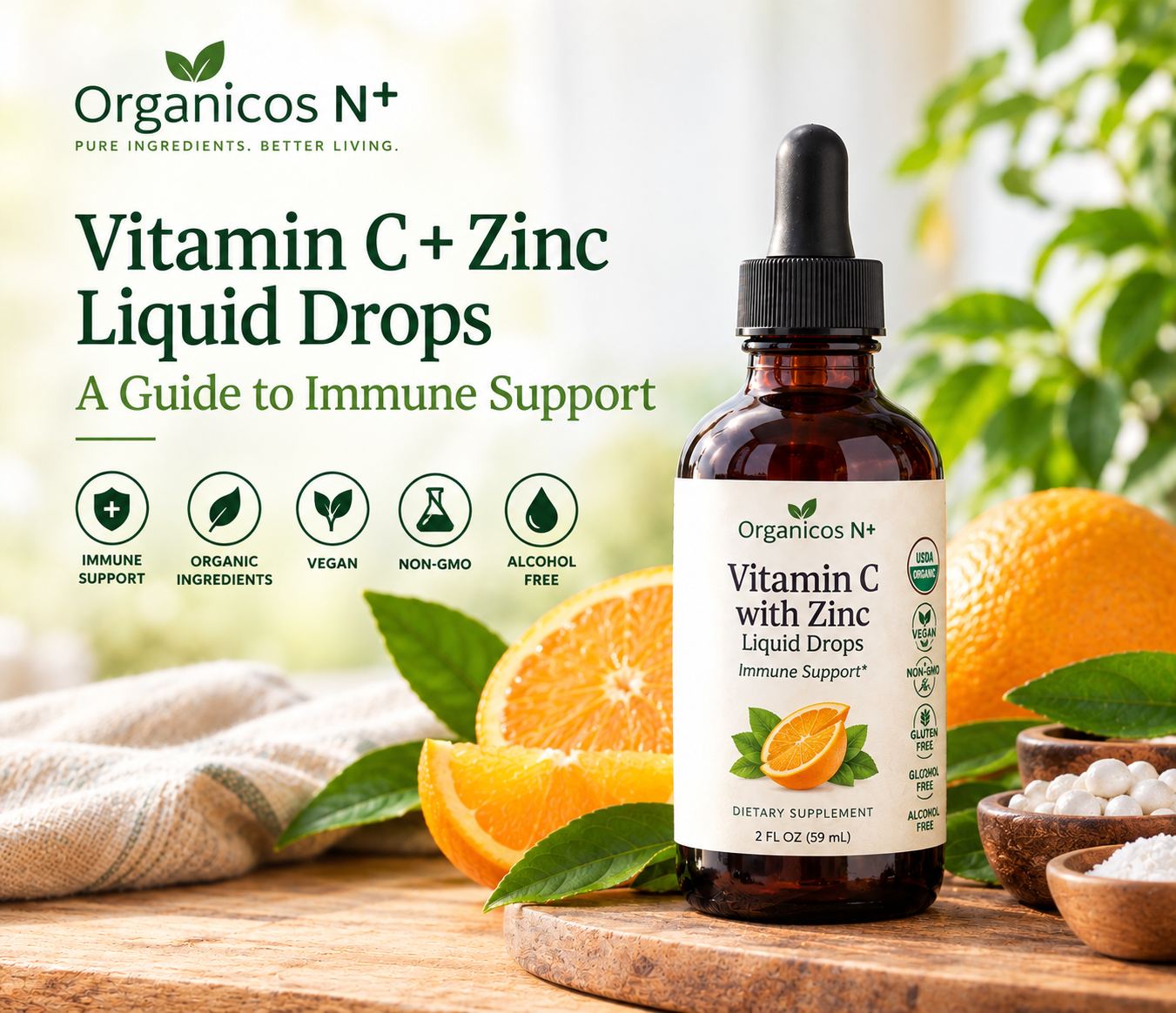
Vitamin C with Zinc Liquid Drops

Vitamin C + Zinc Liquid Drops: A Guide to Immune Support

Supporting your immune system starts with the basics: a balanced diet, adequate sleep, regular physical activity and sufficient intake of essential nutrients. Among the nutrients involved in normal immune function, vitamin C and zinc are especially important.

Vitamin C is a water-soluble nutrient and antioxidant that helps the immune system function properly, while zinc is an essential mineral involved in numerous cellular processes and immune responses.

For people looking for a convenient way to include these nutrients in their daily wellness routine, Vitamin C + Zinc Liquid Drops offer an easy-to-take alternative to traditional tablets and capsules.

Organicos N+ Vitamin C with Zinc Liquid Drops combines vitamin C from organic acerola (Malpighia emarginata) fruit extract with zinc citrate in a liquid formula. It is made with organic ingredients and is described by the brand as vegan, non-GMO, soy-free, gluten-free and dairy-free.

But what do vitamin C and zinc actually do? What does research say about immune support? And what should you consider when choosing a liquid supplement?

Let us explore the science and the product in more detail.

What Are Vitamin C and Zinc?

Vitamin C and zinc are essential nutrients that the body needs for normal health and immune function.

Vitamin C

Vitamin C, also known as ascorbic acid, is a water-soluble vitamin naturally found in many fruits and vegetables. It acts as an antioxidant and helps protect cells from oxidative damage. The body also needs vitamin C to make collagen, support wound healing and improve the absorption of iron from plant-based foods.

Vitamin C also plays an important role in both innate and adaptive immune function. Research from the National Institutes of Health indicates that vitamin C contributes to normal immune responses and that inadequate vitamin C intake can impair immune function.

Zinc

Zinc is an essential mineral involved in numerous biological processes. It is required for normal cellular metabolism, protein and DNA synthesis, wound healing and immune function.

Zinc is involved in both innate and adaptive immune responses. Maintaining adequate zinc status is therefore important for normal immune system activity.

Because vitamin C and zinc perform different but complementary roles in the body, they are commonly combined in nutritional supplements.

Why Are Vitamin C and Zinc Important for Immune Support?

Your immune system is a complex network of cells, tissues and organs that works continuously to help protect the body from harmful microorganisms.

Rather than thinking about a supplement as simply “boosting” immunity, it is more accurate to focus on providing the nutrients your immune system needs to function normally.

The NIH Office of Dietary Supplements explains that getting adequate amounts of vitamins and minerals—including vitamin C and zinc—is important for healthy immune function. When a person does not get enough of an essential nutrient, immune function can be adversely affected.

This is why maintaining a nutritious diet is the foundation of immune health.

A vitamin C and zinc supplement can be useful as part of a broader nutritional routine, particularly when dietary intake may not provide adequate amounts.

Potential Benefits of Vitamin C + Zinc

1. Supports Normal Immune Function

Both vitamin C and zinc are involved in normal immune function.

Vitamin C contributes to immune responses and provides antioxidant activity, while zinc plays a role in the development and function of immune cells.

Providing adequate amounts of these nutrients helps support the body’s normal physiological processes.

However, taking more than the body needs does not necessarily provide additional immune benefits. The NIH notes that, in people who are not deficient, increasing vitamin and mineral intake through supplements generally does not prevent infections or make them resolve faster.

2. Provides Antioxidant Support

Vitamin C is well known for its antioxidant properties.

Free radicals are produced naturally during normal metabolism and can also arise from environmental factors. Vitamin C helps protect cells from oxidative damage by acting as an antioxidant.

Organicos N+ provides vitamin C from organic acerola fruit extract, a botanical source of vitamin C.

3. Supports Normal Cellular Function

Zinc is involved in many aspects of cellular metabolism and is required for the activity of hundreds of enzymes.

It also contributes to DNA and protein synthesis, cell signalling and division, wound healing and immune function.

These roles make adequate zinc intake important for maintaining normal physiological function.

4. May Support Cold-Season Wellness

Vitamin C and zinc are often associated with seasonal wellness because both have been studied in relation to the common cold.

The evidence is different for each nutrient.

According to the NIH, regular vitamin C supplementation may modestly reduce the duration and severity of cold symptoms in some circumstances, but taking vitamin C after cold symptoms begin does not appear to provide the same benefit.

Research on zinc suggests that certain forms, particularly zinc lozenges or syrup, may shorten the duration of a cold when used early. However, results depend on the formulation, dose and timing, and these findings should not automatically be applied to every zinc supplement.

Therefore, vitamin C and zinc should be viewed as nutrients that support normal immune function rather than as cures or guaranteed protection against colds.

Vitamin C + Zinc Liquid Drops: Why Choose a Liquid Formula?

Traditional vitamin and mineral supplements are often available as tablets, capsules or chewables. Liquid supplements provide another option.

Organicos N+ Vitamin C with Zinc Liquid Drops are designed for people who prefer a liquid format. The product can be taken directly by mouth or mixed with drinking water or juice, according to the product directions.

A liquid format can be particularly convenient for adults who dislike swallowing tablets or capsules.

The product page also describes the formula as an easy-to-take liquid supplement that dissolves in the body quickly compared with pills.

As with any supplement, however, the form of delivery does not by itself guarantee greater health benefits. What matters is the nutrient content, formulation, serving size, quality and suitability for the individual.

Why Acerola for Vitamin C?

One of the distinctive features of the Organicos N+ formula is its source of vitamin C.

The product uses organic acerola (Malpighia emarginata) fruit extract as its vitamin C ingredient.

Acerola is a fruit naturally known for its vitamin C content. Using acerola fruit extract allows the product to incorporate a botanical source into its liquid vitamin formula.

For consumers specifically looking for an organic liquid vitamin C, checking the source of the vitamin C is useful when comparing products.

What Is in Organicos N+ Vitamin C with Zinc Liquid Drops?

Organicos N+ Vitamin C with Zinc Liquid Drops combines two key ingredients:

  • Vitamin C: sourced from organic acerola (Malpighia emarginata) fruit extract
  • Zinc: provided as zinc citrate

The other ingredients listed on the product page are organic vegetable glycerin, purified water and organic natural flavours. The product page states that the formula contains no additives and no preservatives.

The product is also listed as:

  • USDA Organic
  • Vegan
  • Non-GMO
  • Soy-free
  • Gluten-free
  • Dairy-free
  • Made in the USA
  • Made in GMP- and ISO-certified facilities
  • Third-party tested

These characteristics make it an option for consumers who prioritise organic and clean-label supplement formulations.

How to Take Vitamin C + Zinc Liquid Drops

According to the Organicos N+ product instructions, the suggested serving size is 1 mL.

The product is formulated for ages 4 and above. Users are instructed to shake the bottle well before each use and take up to 1 mL, one to two times daily, either directly by mouth or mixed with drinking water or juice.

Because supplement formulations differ, it is important not to assume that the serving size for one vitamin C and zinc product applies to another.

Follow the directions provided with the specific product you are using.

How Should Vitamin C + Zinc Liquid Drops Be Stored?

Proper storage is important for maintaining product quality.

The Organicos N+ product instructions state that the liquid drops should be refrigerated and consumed within two months of opening. The product should also be kept away from children, and consumers are advised not to use it if the seal is broken.

The manufacturer also advises avoiding direct dropper contact with the mouth to help prevent contamination or damage to the product.

Always check the current product label for storage instructions.

Vitamin C + Zinc: Food Sources vs Supplements

A healthy diet should remain the primary source of essential nutrients whenever possible.

Foods rich in vitamin C include:

  • Oranges and other citrus fruits
  • Strawberries
  • Kiwi
  • Bell peppers
  • Broccoli
  • Tomatoes
  • Potatoes

Vitamin C is naturally present in a wide variety of fruits and vegetables.

Foods containing zinc include:

  • Seafood
  • Meat
  • Poultry
  • Beans
  • Nuts
  • Whole grains
  • Dairy products

Zinc is naturally present in a range of animal- and plant-based foods.

A supplement can complement a healthy diet when additional intake is appropriate, but it should not be viewed as a substitute for nutritious food.

How Much Vitamin C and Zinc Do You Need?

Nutrient requirements vary according to age, sex and life stage.

For adults, the NIH lists a recommended dietary allowance for vitamin C of 75–90 mg per day, with people who smoke requiring an additional 35 mg per day.

For zinc, the adult recommended intake is generally 8 mg per day for women and 11 mg per day for men, with requirements varying during pregnancy and breastfeeding.

More is not always better.

The adult upper intake level for zinc is 40 mg per day from all sources. Excessive zinc intake over time can interfere with copper absorption and may adversely affect immune function.

For vitamin C, very high supplemental intakes can cause gastrointestinal side effects such as diarrhoea, nausea and abdominal cramps.

If you already take a multivitamin or other supplements, check the combined nutrient amounts before adding another vitamin C or zinc product.

Who May Want to Consider Vitamin C + Zinc Liquid Drops?

A vitamin C and zinc liquid supplement may appeal to people who:

  • Prefer liquid supplements over tablets or capsules
  • Want vitamin C and zinc in one formula
  • Follow a vegan lifestyle
  • Prefer organic ingredients
  • Want a convenient supplement for their daily wellness routine
  • Prefer an orange-flavoured liquid formula

Organicos N+ specifically describes its formula as vegan, made in the USA and orange flavoured, with certified organic ingredients.

However, individual nutritional needs vary. A healthcare professional can help determine whether supplementation is appropriate for you.

Safety and Important Considerations

Vitamin C and zinc are essential nutrients, but taking excessive amounts can cause unwanted effects.

High zinc intake can cause nausea, vomiting, headaches, stomach discomfort and loss of appetite. Long-term excessive zinc intake can interfere with copper absorption and may impair immune function.

Vitamin C in excessive supplemental amounts can also cause gastrointestinal discomfort, including diarrhoea and nausea.

The Organicos N+ product page advises consumers to consult a physician before use if they are pregnant or nursing, taking medication or have a medical condition.

It is also important to remember that vitamin C and zinc supplements are not intended to diagnose, treat, cure or prevent disease.

Frequently Asked Questions

What are Vitamin C + Zinc Liquid Drops?

Vitamin C + Zinc Liquid Drops are a liquid dietary supplement combining vitamin C and zinc. Organicos N+ uses organic acerola fruit extract as its vitamin C source and zinc citrate as its zinc source.

Are vitamin C and zinc good for immune support?

Both nutrients are important for normal immune function. Vitamin C contributes to immune function and antioxidant protection, while zinc plays a role in immune-cell development and function.

Does vitamin C prevent colds?

Vitamin C does not guarantee protection against colds. Regular supplementation may modestly reduce cold duration or symptom severity in some people, but taking vitamin C after symptoms begin does not appear to provide the same benefit.

Does zinc help with colds?

Some research suggests that certain zinc preparations may shorten the duration of a common cold when used early. However, results vary according to the form, dose and timing of zinc supplementation.

Why choose liquid vitamin C and zinc?

Liquid supplements offer an alternative to tablets and capsules and can be convenient for people who prefer liquid formulations. Organicos N+ Vitamin C with Zinc Liquid Drops can be taken directly or mixed with water or juice according to the product directions.

Is Organicos N+ Vitamin C with Zinc vegan?

Yes. The product is listed as a vegan formula and uses organic ingredients. It is also listed as USDA Organic, non-GMO, soy-free, gluten-free and dairy-free.

What is the vitamin C source in this product?

The vitamin C comes from organic acerola (Malpighia emarginata) fruit extract. Zinc is provided as zinc citrate.

How should the product be stored?

The Organicos N+ product instructions state that the product should be refrigerated after opening and consumed within two months. Always follow the current product label for storage and use instructions.

Final Thoughts

Vitamin C + Zinc Liquid Drops provide a convenient way to incorporate two essential nutrients associated with normal immune function into a daily wellness routine.

Vitamin C contributes to immune function and antioxidant protection, while zinc plays important roles in immune-cell function, cellular metabolism, protein synthesis and wound healing.

For consumers who prefer an organic liquid supplement, Organicos N+ Vitamin C with Zinc Liquid Drops combines vitamin C from organic acerola fruit extract with zinc citrate. The formula is vegan, non-GMO, soy-free, gluten-free and dairy-free, and is made in the USA.

A supplement should complement—not replace—a nutritious diet and healthy lifestyle. Getting adequate sleep, eating a variety of nutrient-rich foods, staying physically active and following good health practices all remain important parts of supporting overall wellness.

If you are considering vitamin C and zinc supplementation, particularly if you take medications, have a medical condition, are pregnant or breastfeeding, consult a qualified healthcare professional before use.

Disclaimer: This article is for educational purposes only and is not intended to diagnose, treat, cure or prevent any disease. Individual nutritional needs vary. Always follow the product label and seek professional medical advice when appropriate.

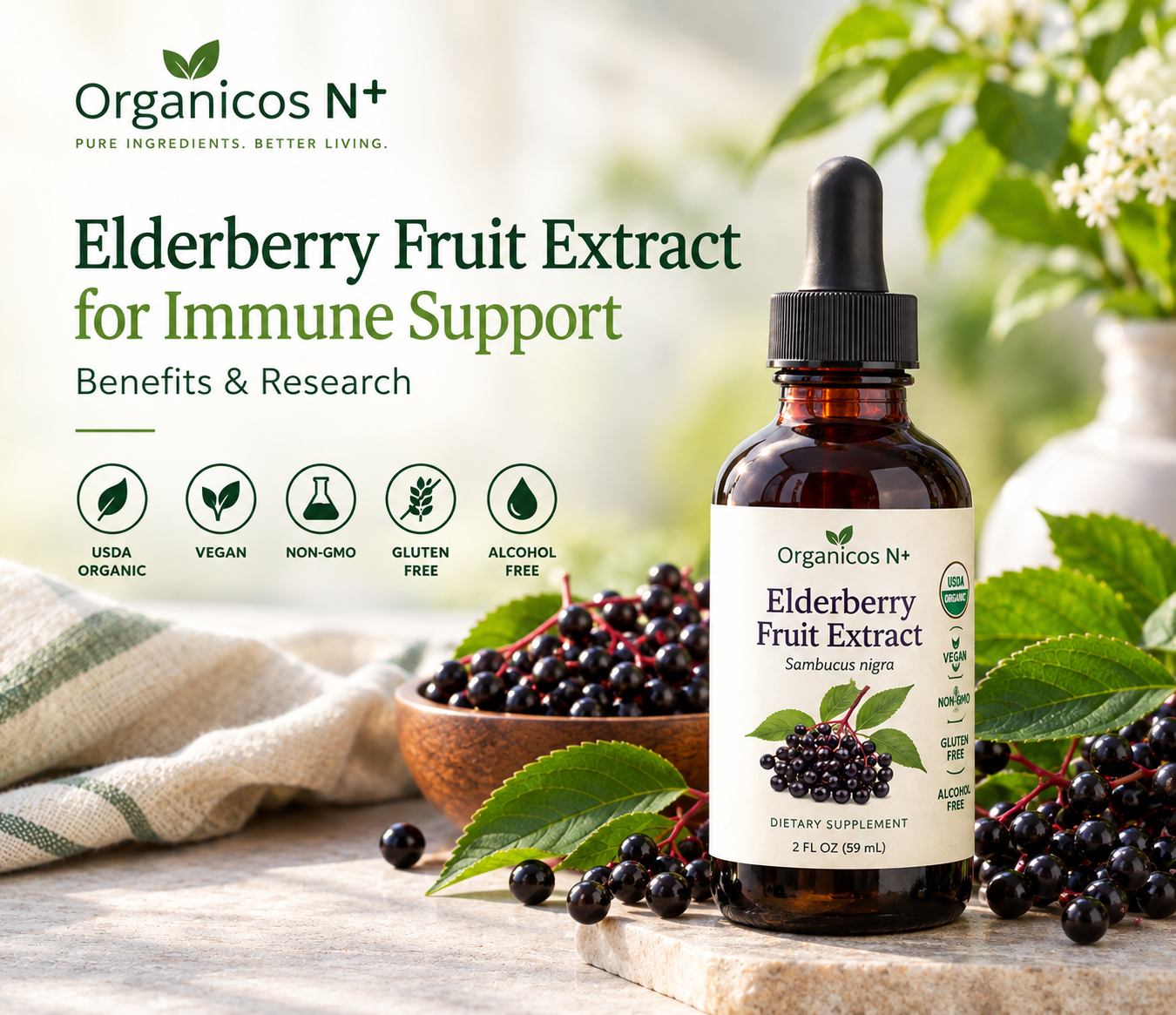
Elderberry Fruit Extract

Elderberry Fruit Extract for Immune Support: Benefits & Research

Elderberry fruit extract has become a popular botanical supplement for people interested in seasonal wellness and immune support. Derived from the dark purple berries of Sambucus nigra, commonly known as black elderberry or European elder, elderberry has been used traditionally for colds and flu.

Modern research has explored whether elderberry may help support the body’s natural defences and reduce the duration or severity of certain upper respiratory symptoms. While early research is promising, scientists also point out that more high-quality clinical studies are needed before firm conclusions can be made. (NCCIH)

In this guide, we explore elderberry fruit extract for immune support, its potential benefits, the research behind it, how it is commonly used and important safety considerations.

What Is Elderberry Fruit Extract?

Elderberry fruit extract is a concentrated botanical preparation made from the fruit of the Sambucus nigra plant.

The berries are naturally rich in plant compounds, including anthocyanins and other polyphenols. These compounds contribute to the fruit’s characteristic dark purple colour and are widely studied for their antioxidant properties.

Elderberry has a long history of traditional use. According to the National Center for Complementary and Integrative Health (NCCIH), elderberry has traditionally been used for colds and flu, and it is now commonly marketed as a dietary supplement for seasonal wellness. (NCCIH)

Today, elderberry is available in several forms, including:

  • Liquid extracts
  • Syrups
  • Capsules
  • Gummiest
  • Powders
  • Traditional herbal preparations

A liquid elderberry fruit extract can be a convenient option for adults who prefer a liquid supplement rather than capsules or tablets.

Elderberry Fruit Extract for Immune Support

The immune system is a complex network involving cells, tissues and organs that helps the body respond to potentially harmful microorganisms.

Elderberry should not be considered a replacement for a healthy lifestyle or medical treatment. However, its traditional use and emerging research have made it an interesting botanical ingredient for people looking to support their overall wellness.

Research has primarily focused on elderberry in relation to colds, influenza and other upper respiratory infections. NCCIH reports that some preliminary studies suggest elderberry may help relieve symptoms associated with colds, flu and other upper respiratory infections, although conclusive evidence from high-quality clinical trials is still lacking.

This distinction is important when evaluating elderberry supplements: research may be encouraging, but elderberry should not be described as a proven treatment or cure for infections.

Potential Benefits of Elderberry Fruit Extract

1. Contains Naturally Occurring Antioxidants

One of the key reasons elderberry attracts attention is its naturally occurring antioxidant compounds.

Black elderberries contain anthocyanins and other polyphenols. These compounds have antioxidant activity and are being investigated for their potential biological effects.

Antioxidants are commonly associated with protection against oxidative stress, which occurs when there is an imbalance between free radicals and the body’s antioxidant defences.

Including a variety of fruits, vegetables and other plant foods in a balanced diet is an important way to obtain naturally occurring antioxidants. Elderberry extract can complement this approach as a botanical supplement.

2. May Support Seasonal Wellness

Elderberry is particularly popular during autumn and winter, when many people become more focused on respiratory and immune wellness.

Traditional use has associated elderberry with colds and flu, while preliminary human research has investigated whether supplementation may influence respiratory symptoms.

A 2019 meta-analysis of four randomised controlled trials found that black elderberry supplementation was associated with reductions in the duration and severity of upper respiratory symptoms compared with placebo. (NCCIH)

However, the number of studies remains relatively small, so these findings should be interpreted cautiously.

3. May Help With Certain Upper Respiratory Symptoms

One of the most researched uses of elderberry is its relationship with upper respiratory symptoms.

A review cited by NCCIH found that some preliminary studies suggest elderberry may relieve symptoms associated with flu or other upper respiratory infections. At the same time, NCCIH states that conclusive evidence from high-quality clinical trials is lacking. (NCCIH)

Therefore, it is more accurate to say that elderberry may support seasonal respiratory wellness rather than claim that it treats respiratory infections.

4. Provides Plant-Based Botanical Compounds

For people following plant-focused wellness routines, elderberry offers a convenient way to incorporate botanical compounds into their supplement regimen.

Organicos N+ Elderberry Fruit Extract is made from organic Sambucus nigra and is formulated as a liquid extract. The product is listed as USDA Organic, vegan, non-GMO, kosher, gluten-free and alcohol-free.

The product’s other ingredients are organic vegetable glycerin and purified water, with the manufacturer stating that the formula contains no additives or preservatives. (Organicos N+ –)

5. Convenient Liquid Format

Liquid herbal extracts can be convenient for people who prefer not to swallow capsules.

The Organicos N+ Elderberry Fruit Extract can be taken directly or mixed with drinking water or juice according to the product’s suggested use. (Organicos N+ –)

This makes liquid elderberry extract easy to incorporate into an existing daily wellness routine.

What Does Research Say About Elderberry and Immunity?

The scientific evidence surrounding elderberry is promising but still developing.

Several small clinical studies have examined black elderberry in relation to upper respiratory symptoms. According to NCCIH, a 2019 meta-analysis found that black elderberry supplementation reduced the total duration and severity of upper respiratory symptoms in the studies reviewed. (NCCIH)

However, NCCIH also emphasises that only a small number of studies have evaluated elderberry for colds, flu and other upper respiratory infections. Consequently, there is not enough high-quality evidence to establish elderberry as an effective treatment for these conditions. (NCCIH)

A useful way to understand the current research is:

What appears promising:

  • Some studies report reduced respiratory symptom duration.
  • Some studies report reduced symptom severity.
  • Elderberry has a long history of traditional use.
  • The fruit contains naturally occurring anthocyanins and other plant compounds.

What remains uncertain:

  • Whether elderberry can prevent infections.
  • How effective different preparations and concentrations are.
  • The optimal dosage for different health goals.
  • Whether the findings apply equally to all elderberry products.

More large-scale, well-designed clinical trials would help answer these questions.

Elderberry Fruit Extract and the Immune System

It is tempting to think of an immune-support supplement as something that simply “boosts” immunity. In reality, the immune system is highly complex, and more immune activity is not necessarily better.

For this reason, responsible discussions of elderberry should focus on supporting overall wellness rather than claiming that elderberry dramatically boosts immune function.

Elderberry’s antioxidant compounds and its traditional use for seasonal respiratory wellness are the main reasons it continues to attract interest.

A healthy immune-support routine should also include adequate sleep, a balanced diet, regular physical activity, stress management and good hygiene.

Black Elderberry vs Elderberry

The term black elderberry commonly refers to Sambucus nigra, also known as European elder.

This is the species used in Organicos N+ Elderberry Fruit Extract.

When shopping for an elderberry supplement, checking the botanical name can help you understand exactly which plant species is being used.

You should also consider:

  • The plant part used
  • Extract concentration
  • Serving size
  • Additional ingredients
  • Manufacturing standards
  • Third-party testing
  • Organic certification, where applicable

Not all elderberry products are necessarily identical, so comparing product labels is important.

How to Use Elderberry Fruit Extract

The appropriate amount depends on the specific product and its concentration.

For Organicos N+ Elderberry Fruit Extract, the suggested use for adults aged 18 and above is to shake well and take up to 1 mL, one to three times daily, either directly by mouth or mixed with drinking water or juice. (Organicos N+ –)

Always follow the directions on the product you are using rather than assuming that the serving size of one elderberry supplement applies to another.

A liquid elderberry extract can be incorporated into a routine by:

  • Taking the recommended serving directly
  • Mixing it with water
  • Mixing it with juice
  • Adding it to a smoothie where appropriate

Consistency and following the manufacturer’s instructions are more important than taking more than the recommended serving.

When Should You Take Elderberry Extract?

There is no universally established time of day that is proven to be best for taking elderberry.

Some people prefer taking their botanical supplements in the morning, while others prefer incorporating them into an evening routine.

The important consideration is to follow the product’s suggested use and avoid exceeding the recommended serving.

If you take prescription medicines or have an existing medical condition, consult your healthcare provider before adding elderberry or another herbal supplement to your routine.

Is Elderberry Safe?

Properly prepared elderberry products can be used by many adults, but consumers should understand the difference between commercial preparations and raw plant material.

NCCIH warns that raw or unripe elderberries, as well as leaves and stems of the elder tree, contain cyanide-producing substances that can cause nausea, vomiting and severe diarrhoea.

For this reason, consumers should use properly prepared elderberry products rather than attempting to consume raw or unripe elderberries or other parts of the plant.

People who take medication should discuss elderberry use with a healthcare professional because herbal products can interact with medicines. NCCIH also notes that there is limited information about elderberry’s safety during pregnancy and breastfeeding. (NCCIH)

Why Choose Organicos N+ Elderberry Fruit Extract?

Organicos N+ Elderberry Fruit Extract is made with organic Sambucus nigra and is offered in a liquid format.

According to the product information, the formula contains:

  • Organic elderberry (Sambucus nigra)
  • Organic vegetable glycerin
  • Purified water
  • No additives
  • No preservatives

The product is also listed as USDA Organic, vegan, non-GMO, kosher, gluten-free and alcohol-free. The manufacturer states that the product is made in the USA in GMP- and ISO-certified facilities and is third-party tested.

For consumers searching for an organic elderberry fruit extract, the product provides a convenient liquid option for incorporating elderberry into a plant-focused wellness routine.

Frequently Asked Questions

What is elderberry fruit extract?

Elderberry fruit extract is a concentrated botanical preparation made from the fruit of Sambucus nigra, commonly known as black elderberry or European elder.

Is elderberry good for immune support?

Elderberry is traditionally used for seasonal wellness and has been studied for cold, flu and upper respiratory symptoms. Some preliminary research is promising, but there is not enough high-quality evidence to establish elderberry as a proven immune treatment.

Does elderberry prevent colds?

Current evidence does not establish elderberry as a reliable way to prevent colds. Some studies have investigated whether it may reduce the duration or severity of respiratory symptoms, but more research is needed. (NCCIH)

What is Sambucus nigra?

Sambucus nigra is the botanical name for black elderberry or European elder. It is the elderberry species used in the Organicos N+ Elderberry Fruit Extract.

How much elderberry extract should adults take?

Dosage varies between products. Organicos N+ recommends up to 1 mL one to three times daily for adults aged 18 and above, either directly or mixed with water or juice. Always follow the product label.

Can elderberry be taken every day?

Some products are designed for regular use, but individual circumstances differ. Follow the manufacturer’s directions and consult a healthcare professional if you take medication, have a medical condition, are pregnant or are breastfeeding.

Is liquid elderberry better than capsules?

Liquid and capsule formats have different characteristics. A liquid format may be preferable for people who find capsules difficult to swallow, while the most important considerations are the product’s ingredients, concentration, quality and recommended serving.

Final Thoughts

Elderberry fruit extract for immune support continues to attract interest because of its traditional use, naturally occurring plant compounds and emerging scientific research.

Studies have investigated black elderberry, particularly Sambucus nigra, for seasonal respiratory wellness. Some research suggests that elderberry may help reduce the duration or severity of certain upper respiratory symptoms, but current evidence is still limited and more high-quality research is needed.

For those interested in adding elderberry to a plant-based wellness routine, Organicos N+ offers an organic Elderberry Fruit Extract made from Sambucus nigra in a convenient liquid format.

As with any dietary supplement, elderberry should complement—not replace—a balanced diet, healthy lifestyle and appropriate medical care.

Disclaimer: This article is for educational purposes only and is not intended to diagnose, treat, cure or prevent any disease. Consult a qualified healthcare professional before starting a dietary supplement, particularly if you are pregnant, breastfeeding, taking medication or have an existing medical condition.

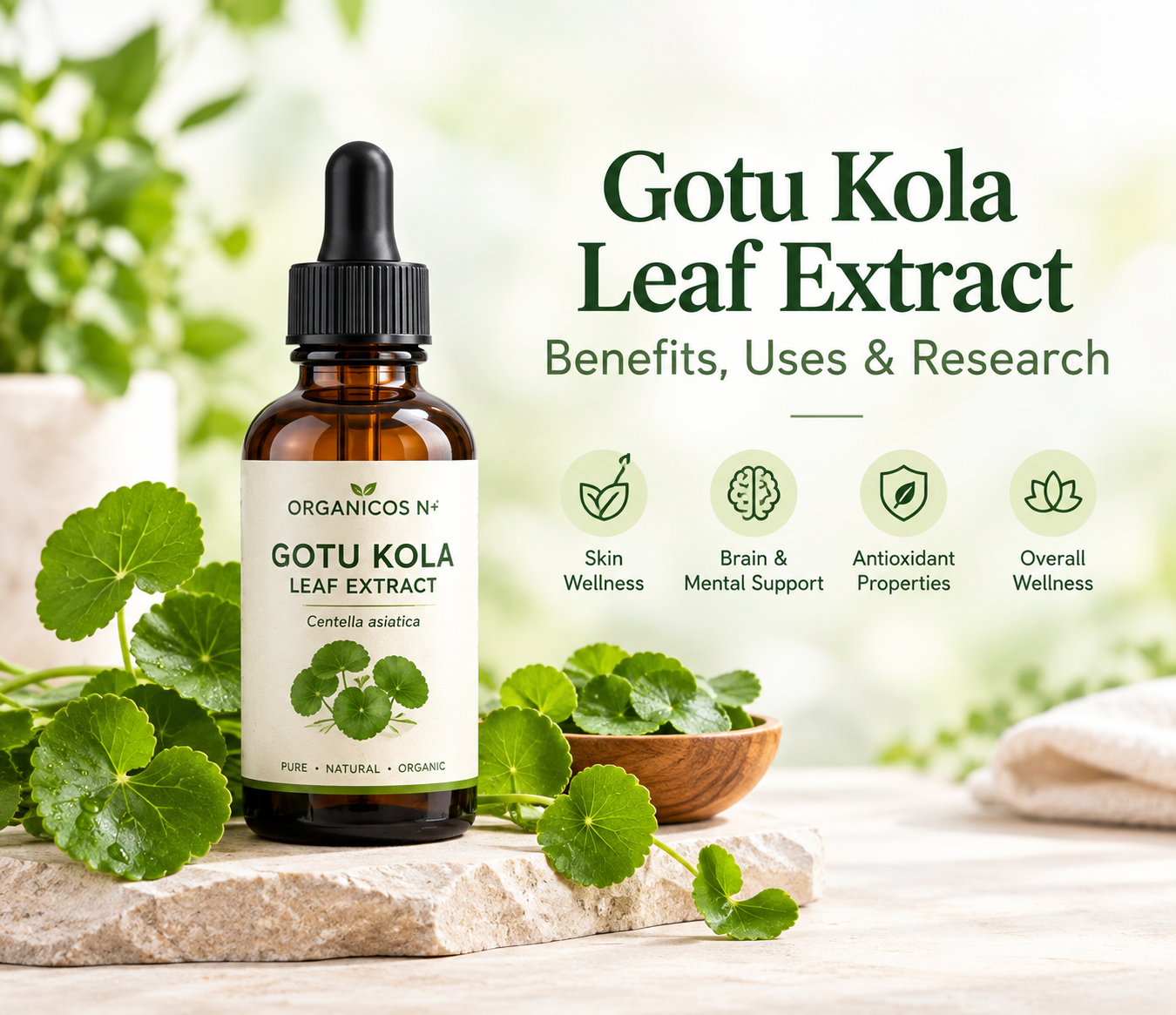
Organic Gotu Kola Leaf Extract benefits and uses – Centella asiatica

Gotu Kola Leaf Extract: Benefits, Uses, Research & How to Use

Gotu Kola Leaf Extract, derived from the leaves of Centella asiatica, is a traditional botanical used for centuries in Asian wellness practices. Today, Gotu Kola has attracted growing scientific interest because it naturally contains plant compounds such as triterpenoids, including asiaticoside, madecassoside, asiatic acid and madecassic acid.

From antioxidant support to skin health and general wellness, researchers are exploring several potential benefits of this versatile herb. However, while laboratory and clinical research is promising in some areas, more high-quality human studies are needed before definitive health claims can be made.

What Is Gotu Kola?

Gotu Kola, scientifically known as Centella asiatica, is a leafy herb native to tropical regions of Asia and also found in other tropical and subtropical areas. It is sometimes called Asian pennywort, Indian pennywort or tiger grass.

Unlike kola nut, Gotu Kola does not contain caffeine. The plant has traditionally been consumed as a leafy vegetable and used in Ayurvedic and traditional Chinese medicine.

Modern research has focused particularly on the plant’s naturally occurring triterpenoids. These compounds are among the key components researchers investigate when studying the potential biological effects of Centella asiatica.

Gotu Kola Leaf Extract Benefits

1. May Support Skin Health

One of the most researched areas surrounding Gotu Kola is skin health.

Research has investigated Centella asiatica and its triterpenoid compounds for their potential effects on skin-related processes, including inflammation, collagen production and tissue repair. Laboratory and animal research has also explored its potential role in supporting healthy skin responses.

A systematic review examining Gotu Kola and wound healing found evidence from several clinical trials suggesting that Centella asiatica may support processes involved in wound healing. However, the researchers noted that additional studies are needed to establish its effectiveness more conclusively.

This research is one reason Gotu Kola is commonly associated with skin wellness and healthy skin support.

2. Contains Naturally Occurring Antioxidant Compounds

Gotu Kola contains several naturally occurring plant compounds, including triterpenoids, flavonoids and other phytochemicals.

Antioxidants are compounds that help protect cells from oxidative stress caused by free radicals. Research on Centella asiatica has identified antioxidant activity in laboratory and experimental studies.

Because antioxidant activity observed in laboratory research does not automatically translate into a specific health outcome in humans, Gotu Kola is best viewed as a botanical source of naturally occurring plant compounds rather than a treatment for disease.

3. May Support Cognitive and Mental Wellness

Gotu Kola has traditionally been used as an herbal brain tonic and has attracted interest for its potential relationship with memory, cognition and mood.

However, the human evidence is mixed. A systematic review and meta-analysis of randomized controlled trials found no significant overall improvement across cognitive-function domains compared with placebo. Some evidence suggested possible improvements in alertness and certain mood measures, but the researchers concluded that stronger studies are still needed.

Therefore, it is more accurate to describe Gotu Kola as a botanical being researched for cognitive and mood-related wellness rather than claiming that it improves memory or treats cognitive conditions.

4. May Support a Healthy Inflammatory Response

Gotu Kola contains bioactive triterpenoids that have been studied for their antioxidant and anti-inflammatory properties.

Research reviews have identified several potential biological mechanisms through which Centella asiatica compounds may influence inflammatory and oxidative-stress pathways. Much of this evidence, however, comes from laboratory and preclinical research, so additional human research is necessary.

For this reason, Gotu Kola may be considered as part of a broader wellness routine focused on maintaining a healthy inflammatory balance.

5. Traditionally Used for Overall Wellness

Gotu Kola has a long history of traditional use as a food and herbal preparation.

Research has identified a wide variety of naturally occurring compounds in Centella asiatica, including triterpenoids, flavonoids, carotenoids and other phytochemicals. These compounds contribute to the growing scientific interest in Gotu Kola as a botanical ingredient.

For modern consumers, Gotu Kola Leaf Extract can provide a convenient way to incorporate this traditional herb into a daily wellness routine.

Gotu Kola and Skin Health: What Does Research Say?

Gotu Kola is particularly interesting in the field of skin research.

Its major triterpenoids—including asiaticoside, madecassoside, asiatic acid and madecassic acid—have been investigated for their interactions with biological pathways associated with skin health.

A review of the scientific literature found research exploring Centella asiatica in connection with conditions and processes involving the skin, including wounds, burns, acne and dermatitis. Proposed mechanisms include effects on inflammatory signalling, oxidative stress and pathways involved in tissue repair.

A separate systematic review focusing specifically on wound healing identified four clinical trials and concluded that Gotu Kola might enhance aspects of wound healing, while also emphasising the need for additional research.

It is important to distinguish research findings from medical claims. Gotu Kola should not be considered a treatment for wounds, burns, acne or other medical conditions without appropriate medical advice.

Gotu Kola for Brain Health: What We Know

Gotu Kola has a long-standing reputation as a traditional herb for mental and cognitive wellness.

Modern researchers have investigated whether Centella asiatica can influence cognitive performance, mood and alertness. The available evidence does not currently establish a strong overall cognitive benefit.

A systematic review and meta-analysis found no significant differences across cognitive-function domains when Gotu Kola was compared with placebo. Some improvements in alertness and anger were observed in certain analyses, but variations in dosage, preparation and product standardisation limited the conclusions.

In other words, Gotu Kola is promising enough to warrant further research, but claims that it definitively boosts memory or prevents cognitive decline are not supported by sufficiently strong human evidence at this time.

What Makes Organicos N+ Gotu Kola Leaf Extract Different?

Organicos N+ Gotu Kola Leaf Extract is made from certified organic Gotu Kola (Centella asiatica) leaves.

According to the product information, the liquid extract is:

  • Made with organic Gotu Kola
  • USDA Organic
  • Vegan
  • Non-GMO
  • Kosher
  • Gluten-free
  • Alcohol-free
  • Made in the USA
  • Produced in GMP and ISO-certified facilities
  • Third-party tested
  • Free from additives and preservatives

The formula contains organic Gotu Kola, organic vegetable glycerin and purified water.

The liquid format also offers an alternative to traditional capsules and tablets and can be taken directly or mixed with water or juice.

How to Use Gotu Kola Leaf Extract

For the Organicos N+ Gotu Kola Leaf Extract, the product directions state that adults aged 18 and above should:

Shake well before use and take up to 1 mL, 1 to 3 times daily, either directly by mouth or mixed with drinking water or juice.

Always follow the directions on the product label rather than exceeding the suggested serving.

If you are new to herbal extracts, consider discussing their use with a qualified healthcare professional, particularly if you take medication or have an existing medical condition.

Is Gotu Kola Safe?

Gotu Kola has been used traditionally as both food and herbal medicine, and clinical studies have generally reported relatively few adverse effects. However, “natural” does not automatically mean risk-free.

The U.S. National Library of Medicine’s LiverTox database notes that Centella asiatica has been associated with rare cases of clinically apparent liver injury. These reports appear to be uncommon, but they are an important reason to use herbal extracts responsibly.

Organicos N+ advises consulting a physician before using the product if you are pregnant or nursing, taking medication or have a medical condition. The product should also be kept out of reach of children and stored in a cool, dry place.

Who May Consider Gotu Kola Leaf Extract?

Gotu Kola Leaf Extract may appeal to adults looking to add a traditional botanical to a broader wellness routine, particularly those interested in:

  • Plant-based herbal supplements
  • Antioxidant-rich botanical ingredients
  • Skin wellness
  • General wellness support
  • Traditional Ayurvedic and Asian herbs
  • Convenient liquid herbal extracts

It should not be used as a substitute for medical treatment or prescribed medication.

Gotu Kola vs. Other Herbal Extracts

Gotu Kola is distinctive because research has focused on several different areas, particularly skin biology, wound healing and cognitive or mood-related outcomes.

Its naturally occurring triterpenoids also make it different from many common herbal extracts.

However, the best herbal supplement depends on your individual goals. Rather than assuming one herb is universally “better”, consider the botanical’s traditional use, available scientific evidence, product quality and your personal health circumstances.

Frequently Asked Questions About Gotu Kola

What is Gotu Kola Leaf Extract?

Gotu Kola Leaf Extract is a concentrated botanical preparation made from the leaves of Centella asiatica. Gotu Kola has a long history of traditional use and contains naturally occurring compounds such as asiaticoside, madecassoside, asiatic acid and madecassic acid.

What are the main Gotu Kola benefits?

Research has explored Gotu Kola for antioxidant activity, skin health, wound healing, inflammation-related pathways and cognitive or mood-related outcomes. Evidence varies by application, and more high-quality human research is needed for many proposed benefits.

Does Gotu Kola improve memory?

There is currently insufficient evidence to make a strong claim that Gotu Kola improves memory. A systematic review and meta-analysis found no significant overall benefit across cognitive-function domains, although some mood and alertness outcomes showed potential effects.

Is Gotu Kola good for skin?

Gotu Kola has been extensively researched in relation to skin biology. Studies have investigated its triterpenoids and potential effects on inflammation, collagen-related processes and wound healing. However, research does not mean Gotu Kola should be considered a treatment for skin diseases.

Does Gotu Kola contain caffeine?

No. Gotu Kola is a botanical herb and is not the same plant as kola nut. It is not naturally a caffeine-containing herb.

How should I take Gotu Kola liquid extract?

For Organicos N+ Gotu Kola Leaf Extract, the stated serving guidance for adults 18 and above is up to 1 mL, 1 to 3 times daily, either directly or mixed with water or juice. Shake well before use.

Is organic Gotu Kola better?

Organic certification provides information about how agricultural ingredients are produced and handled according to applicable organic standards. Organicos N+ states that its Gotu Kola is certified organic and that the product is manufactured in GMP and ISO-certified facilities.

The Bottom Line

Gotu Kola Leaf Extract is a traditional botanical with growing scientific interest. Research has identified potentially useful properties associated with its naturally occurring triterpenoids and other plant compounds, particularly in relation to skin health, antioxidant activity, wound-healing processes and cognitive or mood-related outcomes.

At the same time, the strength of evidence varies considerably. Some findings are based on laboratory or animal research, while human trials remain limited for several potential benefits. More well-designed clinical studies are needed before definitive health claims can be made.

For adults looking for a convenient plant-based supplement, Organicos N+ Gotu Kola Leaf Extract provides certified organic Centella asiatica in a liquid format, with organic vegetable glycerin and purified water and no additives or preservatives.

Explore Organicos N+ Gotu Kola Leaf Extract and learn more about incorporating this traditional botanical into your daily wellness routine.

Important DisclaimerThese statements have not been evaluated by the U.S. Food and Drug Administration. This product is not intended to diagnose, treat, cure or prevent any disease. Consult your physician before using this product if you are pregnant or nursing, taking medication or have a medical condition.

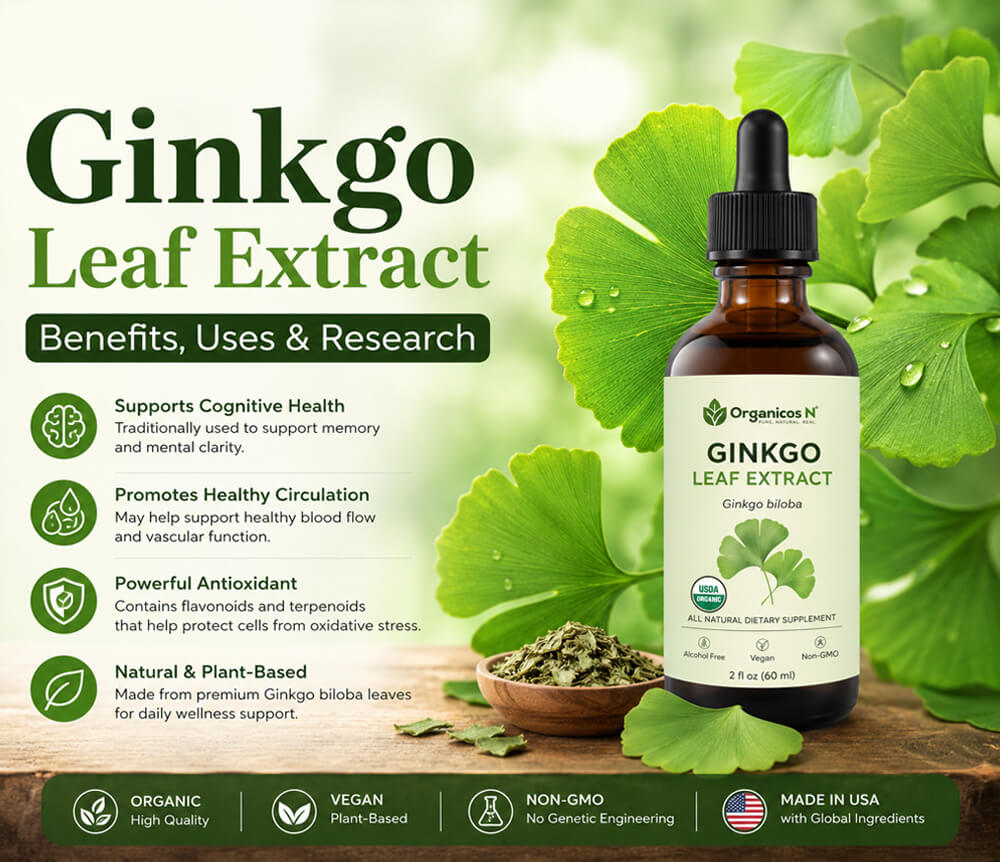
Ginkgo Leaf Extract: Benefits, Uses & What Research Says

Introduction

For centuries, plants have played an important role in traditional wellness practices around the world. One of the most recognizable botanical ingredients is Ginkgo biloba, an ancient tree often described as a “living fossil”. Today, ginkgo leaf is commonly prepared as an extract and is widely used as an ingredient in herbal and dietary supplement products. But what exactly is ginkgo leaf extract, why is it so popular, and what does modern research actually tell us about it?

Ginkgo leaf extract is made from the leaves of the Ginkgo biloba tree. It contains naturally occurring plant compounds that have attracted scientific interest, including flavonoids and terpene lactones. Ginkgo is often associated with discussions about cognitive health, circulation and antioxidant activity, although research does not support all of the health claims commonly made about the herb.

At Organicos N+, we believe that understanding botanical ingredients starts with knowing both their traditional background and what scientific evidence says today. In this guide, we explore ginkgo leaf extract, its potential uses, the research surrounding it and important considerations when choosing an herbal extract.

What Is Ginkgo Leaf Extract?

Ginkgo leaf extract is a concentrated botanical preparation derived from the leaves of Ginkgo biloba, a tree native to China that is now cultivated in many parts of the world.

The ginkgo tree has an exceptionally long history. According to the National Center for Complementary and Integrative Health (NCCIH), ginkgo is an ancient tree species and has traditionally been used in Chinese medicine for various purposes. Today, the leaf—usually in extract form—is the most commonly used part of the plant.

Unlike ginkgo seeds, which can be toxic when consumed in raw or roasted form, properly prepared ginkgo leaf extracts are the form generally used in dietary supplements.

What compounds are found in ginkgo?

Ginkgo leaves naturally contain several types of plant compounds. Among those that have received scientific attention are:

  • Flavonoids
  • Terpene lactones
  • Other naturally occurring botanical compounds

The exact composition of an extract can vary depending on the plant material, extraction method and standardisation process. This is one reason it is useful to look beyond the name of an ingredient and consider the quality and specifications of the actual extract.

Why Is Ginkgo Leaf Extract Popular?

Ginkgo has become particularly well known because it is frequently marketed in connection with brain health and cognitive wellness.

It has also been studied for areas including circulation, anxiety, tinnitus, vertigo and age-related cognitive concerns. However, popularity should not be confused with proven effectiveness. NCCIH states that there is currently no conclusive evidence that ginkgo is helpful for any specific health condition.

This distinction is important when evaluating herbal ingredients. A responsible approach is to recognise what an herb has traditionally been used for while also considering the quality and limitations of modern scientific evidence.

Potential Benefits and Uses of Ginkgo Leaf Extract

1. Antioxidant Interest

Ginkgo leaves contain flavonoid compounds that have antioxidant properties in laboratory research. Antioxidants are compounds that can help neutralise certain reactive molecules known as free radicals.

Oxidative stress is an area of ongoing scientific research because it is associated with numerous biological processes. However, laboratory findings should not automatically be interpreted as proof that consuming a particular herbal extract will prevent or treat a disease.

For this reason, it is more accurate to describe the antioxidant activity of ginkgo as an area of scientific interest rather than making broad therapeutic claims.

2. Cognitive and Brain Health Research

Ginkgo is perhaps best known for its association with memory and cognitive health.

Researchers have investigated whether ginkgo supplementation can improve cognitive performance or reduce cognitive decline. The results, however, are mixed.

According to NCCIH, large studies have not shown ginkgo to be effective in preventing or slowing dementia. Research involving healthy adults has also not established that ginkgo reliably improves cognitive performance.

Some studies have reported modest effects in particular groups or circumstances, but the overall evidence remains inconsistent.

Therefore, ginkgo leaf extract should not be presented as a treatment for dementia, Alzheimer’s disease or other neurological conditions.

3. Research Into Circulation

Ginkgo has also attracted interest because of its possible effects on blood flow and vascular function.

This is one reason ginkgo products are sometimes marketed for circulation and related wellness purposes. However, research has not established ginkgo as an effective treatment for cardiovascular disease or high blood pressure. NCCIH specifically notes that research does not support ginkgo for preventing heart disease or treating high blood pressure.

For consumers, this highlights the importance of separating research interest from clinically established benefits.

4. Traditional Herbal Use

Another reason people choose ginkgo is its long history as a botanical ingredient.

Traditional use does not prove that an ingredient will provide a particular health outcome, but it provides valuable context for understanding why ginkgo has remained an important botanical for generations.

Modern herbal products bring together this traditional knowledge with contemporary extraction, manufacturing and quality-control practices.

What Does Scientific Research Say About Ginkgo?

One of the most important questions when considering any herbal extract is: Does the research support the claims?

In the case of ginkgo, the answer is nuanced.

Ginkgo has been investigated extensively, but NCCIH reports that there is no conclusive evidence that it is effective for any health condition. For dementia prevention, large clinical studies have not shown that ginkgo reduces the risk of dementia or Alzheimer’s disease.

Research into other areas has produced mixed results. Some studies have suggested possible benefits for specific symptoms or conditions, but the overall evidence is not strong enough to establish ginkgo as a treatment.

This does not make ginkgo uninteresting. In fact, its extensive research history makes it one of the better-known botanical extracts. It simply means consumers should approach claims about ginkgo with realistic expectations.

Why can research results differ?

There are several reasons herbal research can be difficult to interpret:

  • Different studies may use different extracts.
  • Extract concentrations and standardisation can vary.
  • Participants may have different health conditions.
  • Dosages and durations may differ.
  • Some studies may have methodological limitations.
  • Results from laboratory studies cannot always be translated directly to humans.

NCCIH also notes that dietary supplements available commercially can differ in important ways from the products used in scientific studies.

Ginkgo Leaf Extract vs. Ginkgo Seeds

It is important not to assume that every part of the ginkgo tree is suitable for consumption.

Ginkgo leaf extract is the commonly used form in modern herbal supplements. Ginkgo seeds, on the other hand, contain compounds that can be toxic when consumed, particularly when raw or improperly prepared.

For this reason, consumers should only use ginkgo products according to the manufacturer’s directions and should not substitute ginkgo seeds for a properly prepared leaf extract.

How to Choose a Quality Herbal Extract

When purchasing an herbal extract, the name of the herb is only one part of the equation. Consider the following factors.

1. Know the botanical ingredient

Look for the botanical name, such as Ginkgo biloba, rather than relying only on a common name.

2. Understand the extract

Find out whether the product is an extract of the leaf and whether relevant product specifications are provided.

3. Look for transparent product information

A reputable herbal product should provide clear information about the ingredient, suggested use, serving information and other relevant product details.

4. Consider manufacturing and quality practices

Quality control matters because botanical products can vary considerably. Good manufacturing and testing practices can help ensure consistency and product quality.

5. Avoid exaggerated health claims

Be cautious of products promising to cure diseases, reverse serious conditions or deliver guaranteed results. “Natural” does not automatically mean “risk-free” or “clinically proven”. NCCIH emphasises that natural products can have side effects and may interact with medicines.

How Is Ginkgo Leaf Extract Commonly Used?

Ginkgo leaf extract is commonly available as an ingredient in dietary supplements and herbal preparations.

The appropriate amount and method of use depend on the specific product, concentration and formulation. Therefore, consumers should follow the instructions provided with their particular product rather than assuming that every ginkgo extract should be taken in the same way.

If you are considering ginkgo as part of your wellness routine, particularly if you take medication or have an existing health condition, speaking with a qualified healthcare professional is a sensible step.

Ginkgo Leaf Extract Safety and Precautions

Although ginkgo leaf extract is generally well tolerated by many adults when taken orally in moderate amounts, it is not appropriate to assume that it is risk-free for everyone.

NCCIH reports that possible side effects include headache, dizziness and gastrointestinal symptoms. More importantly, ginkgo may increase the risk of bleeding in people taking anticoagulant medicines such as warfarin. It may also interact with other medicines.

Extra caution is appropriate if you:

  • Take blood-thinning or anticoagulant medication.
  • Take prescription or over-the-counter medicines.
  • Have a bleeding disorder.
  • Are preparing for surgery or a dental procedure.
  • Are pregnant or breastfeeding.
  • Have a medical condition and are considering starting a new herbal supplement.

Pregnancy and breastfeeding require particular caution because there is limited information about the safety of ginkgo during breastfeeding and potential concerns during pregnancy.

Always follow the product directions and consult a healthcare professional when you are unsure whether an herbal extract is appropriate for you.

Frequently Asked Questions About Ginkgo Leaf Extract

What is ginkgo leaf extract used for?

Ginkgo leaf extract is commonly used as a botanical ingredient in herbal and dietary supplements, particularly in products marketed around general wellness, cognitive health and circulation. However, scientific evidence does not conclusively establish ginkgo as an effective treatment for any specific health condition.

Is ginkgo leaf extract the same as ginkgo biloba extract?

The terms are often used interchangeably when referring to extracts made from Ginkgo biloba leaves. When purchasing a product, check the ingredient and product information to understand exactly which plant part is used.

Is ginkgo leaf extract safe?

Ginkgo leaf extracts are generally well tolerated by many adults when taken orally in moderate amounts. However, side effects and drug interactions can occur. Ginkgo may increase bleeding risk, particularly when combined with certain anticoagulant medicines.

Can ginkgo improve memory?

Ginkgo is widely marketed for memory and brain health, but current evidence does not conclusively demonstrate that it improves cognitive performance in healthy people or prevents cognitive decline.

What should I look for when buying an herbal extract?

Look for clear ingredient information, appropriate product directions, transparent labelling and evidence of consistent quality practices. Avoid products that make unrealistic promises or claim to cure serious diseases.

Where can I find ginkgo leaf extract?

Organicos N+ offers Ginkgo Leaf Extract as part of its range of organic, all-natural liquid herbal extracts. The wider herbal-extract range also includes botanicals such as Gotu Kola, Turmeric, Valerian, Green Tea, Chamomile, Garlic, Fenugreek, Asian Ginseng, Amla and Brahmi.

Final Thoughts

Ginkgo leaf extract has a fascinating history and remains one of the world’s most recognizable botanical extracts. Its long-standing traditional use, distinctive plant chemistry and extensive research history have made it a subject of continued scientific interest.

At the same time, it is important to approach ginkgo with an evidence-based perspective. While research has explored its potential role in areas such as cognitive health, circulation and other aspects of wellness, current evidence does not conclusively establish ginkgo as an effective treatment for a specific health condition.

For consumers interested in botanical ingredients, the best approach is to choose clearly labelled products, understand how an extract is prepared, follow the manufacturer’s directions and consider potential interactions with medicines.

Explore the Ginkgo Leaf Extract and other botanical products from Organicos N+ and discover a broader range of herbal extracts for your natural wellness routine.Important: This article is for educational purposes only and is not intended to diagnose, treat, cure or prevent any disease. Always consult a qualified healthcare professional before starting a new herbal supplement, particularly if you take medication, are pregnant or breastfeeding, or have an existing medical condition.

Vitamin D3 + K2 (MK7) Liquid Drops: Why You Need Both Together

Vitamin D3 gets most of the attention, it’s the “sunshine vitamin,” it’s in nearly every wellness routine, and most people know they need more of it. But there’s a nutrient partnership that rarely gets talked about, even though it may determine whether your vitamin D3 is actually doing its job: vitamin K2, specifically the MK7 form.

Taking D3 without K2 isn’t necessarily wrong, but it may be an incomplete picture. Here’s why these two nutrients are so often paired together, what each one actually does, and how to think about supporting both.

Quick Answer

Vitamin D3 helps your body absorb calcium from your diet, while vitamin K2 (MK7) helps direct that calcium to where it belongs, your bones and teeth, instead of letting it build up in your arteries and soft tissues. Taken together, they support each other’s job. Vitamin D3 alone increases calcium absorption; K2 is what helps make sure that calcium ends up in the right place.

What Does Vitamin D3 Actually Do?

Vitamin D3 (cholecalciferol) is best known for its role in calcium absorption. Without adequate D3, your body struggles to absorb calcium from food, no matter how much calcium you’re consuming. Beyond bone support, D3 also plays a role in:

  • Immune system function
  • Muscle function and strength
  • Mood regulation and general wellness
  • Cellular growth and repair

Most people don’t get enough vitamin D3 from sunlight alone, especially those who live in northern climates, spend most of the day indoors, or have deeper skin tones that naturally produce less D3 from sun exposure. This is exactly why D3 supplementation has become so common.

What Does Vitamin K2 (MK7) Actually Do?

This is the piece that’s often missing from the conversation. Vitamin K2 activates specific proteins in the body, namely osteocalcin and matrix Gla-protein, that are responsible for moving calcium into bone tissue and keeping it out of your arteries and soft tissues.

Without enough K2, some research suggests that increased calcium absorption (thanks to D3) could end up being directed to the wrong places in the body, rather than reinforcing bone density where it’s actually needed. K2 is essentially the “traffic director” for the calcium that vitamin D3 helps your body absorb.

The MK7 form of K2 specifically is considered the most bioavailable and longest-lasting form, staying active in the bloodstream far longer than MK4, another common form of K2. This matters because a longer-acting nutrient means more consistent calcium-directing activity throughout the day.

Why Pairing Them Matters

Think of it this way:

  • Vitamin D3 opens the door, it increases how much calcium your body absorbs from your diet.
  • Vitamin K2 (MK7) decides where that calcium goes, directing it into bone and teeth, and away from arteries and soft tissue.

Taking D3 without supporting K2 intake means you may be increasing calcium absorption without necessarily improving where that calcium is being used. This is the core reason these two nutrients are so frequently recommended as a pair, particularly for:

  • Bone health and density support, especially in adults over 40
  • Cardiovascular wellness, since proper calcium metabolism matters for arterial health
  • Postmenopausal women, who face increased bone density concerns
  • Anyone supplementing with calcium separately, since added calcium intake makes K2’s directing role even more relevant

Do You Need to Take Them Together, or Just Separately Over Time?

For most people, taking D3 and K2 at the same time, ideally with a meal that contains some fat, is the most practical approach. Both are fat-soluble nutrients, meaning they’re better absorbed when taken alongside dietary fat rather than on a completely empty stomach.

Liquid formulations tend to make this easier than juggling multiple pills, since fat-soluble nutrients in a liquid, pre-dissolved form are generally absorbed more efficiently than solid tablets or capsules — the liquid skips the breakdown step a tablet requires before your body can use it.

Building Your Vitamin D Routine with Organicos N+

While a combined D3 + K2 formula is a popular pairing, it’s worth building your foundation with a clean, high-quality vitamin D3 source first. Our Vitamin A, D & E Liquid Drops delivers organic, bioavailable vitamin D3 (cholecalciferol) alongside vitamin A and E, a fast-absorbing liquid formula that supports immune health, heart health, and overall wellness, without synthetic fillers or preservatives.

If you’re focused on broader nutrient coverage alongside your D3 intake, you can also explore our full range of organic liquid vitamins, including our Multi B Vitamins Liquid Drops and Vitamin B12 with Iron Liquid Drops, both formulated for fast absorption and everyday energy support. Browse our complete vitamins category to see the full lineup and build a routine that fits your specific goals.

What to Look for in a Quality D3 (and K2) Supplement

Whether you’re shopping for a D3 formula, a K2 formula, or a combined product, look for:

  • USDA Organic Certification, confirming clean, pesticide-free sourcing
  • Cholecalciferol (D3) rather than ergocalciferol (D2), since D3 is the form your body produces naturally and uses more efficiently
  • MK7 form of K2, if K2 is included, for longer-lasting activity in the bloodstream
  • Liquid, fat-based delivery, since both D3 and K2 are fat-soluble and benefit from this format
  • Non-GMO, vegan sourcing with no unnecessary fillers or preservatives

Frequently Asked Questions

Why do I need vitamin K2 if I’m already taking vitamin D3? Vitamin D3 increases how much calcium your body absorbs, while K2 helps direct that calcium to your bones and teeth rather than your arteries and soft tissues. Taking D3 without K2 may mean the extra calcium you’re absorbing isn’t being used as effectively.

What is the difference between K2 MK7 and MK4? MK7 stays active in the bloodstream significantly longer than MK4, making it the more commonly recommended form for consistent, daily calcium-directing support.

Can I take vitamin D3 without K2? Yes, and many people do. D3 on its own still supports immune function, mood, and calcium absorption. K2 is considered a complementary nutrient that supports where that absorbed calcium ends up, rather than a requirement for D3 to work at all.

What’s the best time to take vitamin D3? Taking vitamin D3 with a meal that contains some fat, generally earlier in the day, supports better absorption since it’s a fat-soluble nutrient.

Is liquid vitamin D3 better absorbed than capsules? Liquid vitamin D3 is generally absorbed more efficiently than capsules or tablets, since it’s already in a pre-dissolved, fat-based form your body can use without the breakdown process a solid capsule requires.

The Bottom Line

Vitamin D3 and vitamin K2 (MK7) aren’t competing nutrients, they’re complementary. D3 helps your body absorb calcium, and K2 helps make sure that calcium is actually put to good use. If bone health, heart health, or calcium metabolism is part of your wellness goals, it’s worth understanding both sides of the equation, not just the vitamin D3 half.

Ready to start building a stronger foundation? Shop our Vitamin A, D & E Liquid Drops for organic, fast-absorbing vitamin D3 support, and explore the rest of our liquid vitamins lineup to round out your daily routine. Every Organicos N+ formula is USDA Organic Certified, vegan, non-GMO, and made in the USA.

These statements have not been evaluated by the Food and Drug Administration. This product is not intended to diagnose, treat, cure, or prevent any disease. Consult your healthcare provider before starting any new supplement.

Organic Vitamin B12 Liquid Drops: Best Time to Take Them for Energy

If you’ve added organic vitamin B12 liquid drops to your routine but still feel like your energy hasn’t budged, timing might be the missing piece. B12 plays a direct role in how your body converts food into usable energy, supports red blood cell production, and keeps your nervous system firing properly — but when you take it can matter almost as much as whether you take it at all.

Here’s exactly when to take your B12 drops, why timing affects how energized you feel, and how to get the most out of every dropperful.

Quick Answer: Best Time to Take B12 Liquid Drops

For most people, the best time to take organic vitamin B12 liquid drops is in the morning, on an empty stomach, roughly 30 minutes before eating. This timing takes advantage of your body’s natural energy needs for the day ahead and avoids the mild sleep disruption some people experience when B12 is taken too close to bedtime.

Why Timing Matters for B12 Absorption

Vitamin B12 is a water-soluble vitamin, which means your body doesn’t store large reserves of it the way it does with fat-soluble vitamins like A, D, and E. Because of this, consistent daily timing helps maintain steady blood levels rather than the peaks and dips that come from irregular use.

Liquid B12 drops are typically taken sublingually (held under the tongue) or mixed into water, which allows the nutrient to enter the bloodstream through the tissue of the mouth rather than relying solely on digestion. This is one of the key reasons liquid B12 tends to outperform tablets and capsules — it skips the slower breakdown process a solid pill requires, allowing for faster, more efficient absorption.

Morning vs. Evening: Which Is Really Better?

Morning (recommended for most people):

  • Aligns with your body’s natural cortisol rhythm and energy demands
  • Helps combat the mid-morning energy slump many people experience
  • Reduces the chance of B12’s energizing effect interfering with sleep

Evening (situational):

  • Some people who work night shifts or have irregular schedules do better taking B12 later in the day, aligned with their own “morning”
  • Not recommended close to bedtime for most people, since B12 supports energy metabolism and can feel mildly stimulating

The main rule of thumb: take it at the same time every day, whichever time you choose, since consistency is what actually drives steady B12 levels and noticeable energy support over time.

Should You Take B12 With or Without Food?

Taking organic vitamin B12 liquid drops on an empty stomach, about 30 minutes before your first meal, generally supports faster absorption since there’s no food competing for uptake. That said, if you find it upsets your stomach, taking it with a small amount of food is a perfectly reasonable alternative — consistency matters more than perfection.

How to Maximize B12 Absorption

A few simple habits can help you get more out of every dose:

Hold it under your tongue for 30–60 seconds before swallowing, if using the sublingual method, to allow for direct absorption

Avoid taking it with coffee or tea immediately afterward, as some compounds in these drinks can interfere with nutrient uptake

Pair with a B-complex formula if you’re managing fatigue, stress, or mood alongside low energy — B12 works alongside other B vitamins like B6 and folate for broader energy metabolism support. Our Multi B Vitamins Liquid Drops combine B12 (as methylcobalamin) with B6, folate, biotin, and niacin in one easy dropper.

Combine with iron if you’re also managing low iron levels, since B12 and iron work together to support healthy red blood cell formation. Our Vitamin B12 with Iron Liquid Drops is formulated specifically for this — a single organic, vegan formula covering both nutrients in one dose.

Who Benefits Most From Consistent B12 Supplementation?

  • Vegans and vegetarians, since B12 is found almost exclusively in animal products, making plant-based diets a common source of deficiency
  • Adults over 50, as natural stomach acid production (needed to absorb B12 from food) declines with age
  • People managing chronic fatigue or low energy, especially when a B12 deficiency has been confirmed by bloodwork
  • Anyone on medications that reduce B12 absorption, such as long-term acid reflux or diabetes medications (always check with your doctor)

What to Look for in a Quality B12 Liquid Supplement

Not every “liquid B12” product on the shelf is created equal. When choosing a formula, look for:

  • USDA Organic Certification, confirming clean, pesticide-free sourcing
  • Methylcobalamin form of B12 — the active, bioavailable form your body can use immediately, rather than synthetic cyanocobalamin
  • Alcohol-free and preservative-free formulation, gentler for daily long-term use
  • Non-GMO, vegan sourcing with no gelatin capsules or animal-derived binders

Every formula at Organicos N+ is built to this standard. You can explore our full range of organic liquid vitamins, including our Vitamin B12 with Iron Liquid Drops for energy and blood health, or browse our complete vitamins category to build a routine that fits your specific needs.

Frequently Asked Questions

What is the best time of day to take vitamin B12 liquid drops? Morning, ideally on an empty stomach about 30 minutes before eating, is generally the best time for most people, since it aligns with the body’s natural energy needs and avoids potential sleep disruption from taking it too late in the day.

Can I take B12 drops at night? You can, but it’s not usually recommended, since B12 supports energy metabolism and may feel mildly stimulating for some people close to bedtime. If you work night shifts, aligning your dose with the start of your “day” is a reasonable approach.

How long does it take for liquid B12 to start working? Some people notice a difference in energy within a few days, while for others — especially those correcting a true deficiency — it can take a few weeks of consistent daily use to feel the full effect.

Is liquid B12 better than B12 tablets? Liquid B12 is generally absorbed faster than tablets, since it skips the disintegration process a solid pill requires and can be absorbed sublingually, directly through the tissue of the mouth.

Can I take B12 and iron together? Yes. B12 and iron both play a role in healthy red blood cell production, and taking them together is common practice for people managing fatigue or mild deficiencies. Our Vitamin B12 with Iron Liquid Drops combines both in a single organic, vegan formula.

The Bottom Line

Getting the timing right on your organic vitamin B12 liquid drops can make a real difference in how consistently you feel supported throughout the day. Take it in the morning, on an empty stomach if possible, and stay consistent — that combination is what allows B12 to do its job effectively over time.

Ready to build B12 into your routine? Shop our Vitamin B12 with Iron Liquid Drops for energy and blood health support, or explore our Multi B Vitamins Liquid Drops for broader B-vitamin coverage. Every Organicos N+ formula is USDA Organic Certified, vegan, alcohol-free, and made in the USA.

These statements have not been evaluated by the Food and Drug Administration. This product is not intended to diagnose, treat, cure, or prevent any disease. Consult your healthcare provider before starting any new supplement.

Vegan Liquid Iron Supplement vs. Iron Tablets: Which Absorbs Better?

If you’ve ever finished a bottle of iron tablets with an upset stomach, constipation, and barely any change in your energy levels, you’re not alone. Iron deficiency is one of the most common nutrient gaps worldwide, especially among vegans, vegetarians, women of childbearing age, and endurance athletes — yet the traditional fix (a hard, compressed tablet) is often the hardest form for your body to actually use.

That’s where a vegan liquid iron supplement comes in. Liquid iron drops have become the go-to alternative for people who want real absorption without the digestive fallout. But is the “liquid absorbs faster” claim actually backed by science, or is it just marketing? Let’s break it down.

Quick Answer

Liquid iron supplements generally absorb faster and more efficiently than iron tablets because they skip the disintegration step your stomach normally has to perform on a solid pill. Iron in liquid form is already dissolved, so it’s immediately available for uptake in the small intestine — which is also why liquid iron tends to cause less constipation and stomach discomfort than traditional tablets.

How Iron Tablets Work — and Why They’re Hard on Your Body

Iron tablets are typically made with compressed ferrous sulfate, ferrous fumarate, or ferrous gluconate, bound together with fillers and coatings. Before your body can absorb any of that iron, your stomach has to:

  1. Break down the tablet’s outer coating
  2. Dissolve the compressed iron salt
  3. Release free iron ions into the digestive tract
  4. Transport those ions across the intestinal wall

Each of those steps is a chance for iron to go unabsorbed — which is a major reason iron tablets have a well-documented reputation for:

  • Constipation and bloating
  • Nausea and stomach cramping
  • Dark, tarry stools
  • Inconsistent absorption, especially in people with low stomach acid or digestive conditions like IBS or Crohn’s disease

Many people simply stop taking iron tablets altogether because the side effects aren’t worth it — which defeats the purpose of supplementing in the first place.

Vegan Liquid Iron Supplement: How It’s Different

A vegan liquid iron supplement delivers iron in a pre-dissolved, plant-based liquid form — usually derived from organic iron-rich botanicals rather than synthetic iron salts. Because the iron is already in solution, your digestive system doesn’t need to break down a tablet coating before absorption can begin.

This matters for absorption in three key ways:

  • Faster bioavailability — liquid nutrients can begin absorbing in the mouth and stomach lining, well before they even reach the small intestine
  • Gentler on the gut — no concentrated iron salt sitting in one spot in your stomach, which is what typically causes irritation with tablets
  • Flexible, adjustable dosing — you can titrate liquid drops up or down based on your needs, something a fixed-dose tablet doesn’t allow

It’s also worth noting: a genuinely vegan liquid supplement contains no gelatin capsules and no animal-derived binders, which many iron tablets on the market still use.

The Absorption Science, Simplified

Nutrition researchers generally agree that liquid-form supplements offer superior bioavailability compared to solid tablets, largely because they bypass the disintegration and dissolution phases that solid dosage forms require. In practical terms, liquid vitamins and minerals — including iron — have been shown to be absorbed by the body up to 5x faster than capsules or tablets.

That speed matters most for people who:

  • Have low stomach acid (common in older adults)
  • Take antacids or acid-reducing medication
  • Have had gastric bypass or digestive surgery
  • Struggle with chronic GI conditions
  • Simply have a hard time swallowing pills

Who Should Consider a Vegan Liquid Iron Supplement?

Liquid iron drops tend to be the better fit for:

  • Vegans and vegetarians, since plant-based diets provide only non-heme iron, which is naturally harder for the body to absorb than the heme iron found in meat
  • People with iron deficiency anemia who need consistent, gentle daily supplementation
  • Pregnant women (always under a doctor’s guidance) managing increased iron demands
  • Athletes and endurance trainers who lose iron through sweat and red blood cell turnover
  • Anyone who has struggled with tablet-related constipation in the past

How to Take Liquid Iron for Maximum Absorption

A few simple habits can meaningfully boost how much iron your body actually uses:

  • Pair it with vitamin C. Vitamin C converts non-heme (plant-based) iron into a form your body absorbs far more efficiently. A dropper of iron alongside a vitamin C–rich formula, like our Vitamin C with Zinc Liquid Drops, is one of the simplest ways to increase uptake.
  • Avoid taking it with coffee, tea, or calcium supplements, all of which can inhibit iron absorption when taken at the same time.
  • Take it consistently, ideally at the same time each day, since steady intake matters more than a single large dose.

What to Look for in a Quality Liquid Iron Supplement

Not all liquid iron products are created equal. When comparing options, look for:

  • USDA Organic Certification — confirms the ingredients are grown and processed without synthetic pesticides
  • Alcohol-free and preservative-free formulas — gentler on the stomach and better suited to daily, long-term use
  • Non-GMO and vegan sourcing — no gelatin, no animal-derived binders
  • Third-party tested purity — so you know exactly what’s (and isn’t) in the bottle

This is exactly the standard we hold every formula to at Organicos N+. Our Vitamin B12 with Iron Liquid Drops combines organic, plant-sourced iron with vitamin B12 — another nutrient commonly low in vegan and vegetarian diets — in a single, fast-absorbing, alcohol-free liquid formula. Pairing iron with B12 is a smart move too, since both nutrients work together to support healthy red blood cell production and steady, natural energy.

If you’re building out a full wellness routine, you can browse our entire lineup of organic liquid vitamins or explore the full shop to find complementary formulas for immune support, bone health, and daily energy.

Liquid Iron vs. Iron Tablets: At a Glance

Liquid Iron DropsIron Tablets
Absorption speedFast — no disintegration stepSlower — tablet must break down first
Stomach comfortGenerally gentlerCommon cause of constipation, cramping
Dosing flexibilityAdjustable, drop by dropFixed dose per pill
Vegan-friendlyTypically yesOften uses gelatin capsules
Best forSensitive stomachs, vegans, seniors, anemiaConvenience for those without GI sensitivity

Frequently Asked Questions

Is liquid iron better absorbed than iron pills?Yes, generally. Liquid iron is already dissolved, so your body can begin absorbing it immediately, without the breakdown process a tablet requires. This often makes liquid iron more effective and easier on the digestive system.

Does liquid iron cause less constipation than tablets?Most people find liquid iron gentler on digestion than tablets, largely because it doesn’t concentrate iron salts in one spot in the stomach the way a compressed pill can.

Can vegans get enough iron from a liquid supplement?Yes. A quality vegan liquid iron supplement made from organic, plant-based sources can help vegans and vegetarians meet their iron needs, especially when paired with vitamin C for better absorption of non-heme iron.

How do I know if I need an iron supplement?Common signs of low iron include fatigue, pale skin, dizziness, and shortness of breath. A blood test from your doctor is the most reliable way to confirm iron deficiency before starting any supplement.

Is it safe to take liquid iron every day?For most healthy adults, daily liquid iron supplementation is safe when taken as directed. As with any supplement, it’s best to check with your doctor first, especially if you’re pregnant, nursing, or managing an existing health condition.

The Bottom Line

If you’ve struggled with the side effects of traditional iron tablets, or you simply want a more efficient way to support your iron levels, a vegan liquid iron supplement is worth the switch. Faster absorption, gentler digestion, and flexible dosing make liquid iron a smarter fit for most people — especially vegans, vegetarians, and anyone managing low iron.

Ready to feel the difference? Shop our Vitamin B12 with Iron Liquid Drops — USDA Organic Certified, vegan, alcohol-free, and formulated for fast, gentle absorption. Pair it with our Vitamin C with Zinc Liquid Drops to maximize uptake, and enjoy 20% off your first subscription order when you subscribe and save.

*These statements have not been evaluated by the Food and Drug Administration. This product is not intended to diagnose, treat, cure, or prevent any disease. Consult your healthcare provider before starting any new supplement.

Best Organic Liquid Vitamin C for Immune Support: What to Look For

Vitamin C is one of the most popular supplements on the market, and also one of the easiest to buy wrong. Most capsules on store shelves are made with synthetic ascorbic acid, bulked out with fillers, and absorbed by the body far less efficiently than you’d expect. If you’re trying to actually support your immune system, the form of best organic liquid vitamin ‘C’ you take matters just as much as the dose.

Here’s what actually separates a high-quality organic liquid vitamin C from the rest of the shelf.

Why Liquid Vitamin C Beats Capsules and Gummies

Capsules have to break down in your stomach before any nutrients reach your bloodstream, a process that can take 20–30 minutes and isn’t always complete. Liquid vitamin C skips that step. Because it’s already in a bioavailable form, your body can begin absorbing it almost immediately, which is one reason liquid supplements are often absorbed up to five times faster than pills.

That matters most during cold and flu season, when you want your immune system supported now, not after a slow digestive breakdown.

What to Look For on the Label

Not all “liquid vitamin C” products are created equal. Before you buy, check for these five things:

1. USDA Organic Certification This is the only label that guarantees third-party verification of organic sourcing. Without it, “organic” is just a marketing word.

2. Alcohol-Free and Preservative-Free Many liquid extracts use alcohol as a carrier or preservative. It’s cheaper to produce, but it’s harsh on the stomach and unnecessary if the formula is made correctly.

3. Non-GMO and Vegan A clean vitamin C formula shouldn’t need animal-derived capsules or genetically modified inputs. Look for both callouts on the bottle.

4. Zinc Pairing Vitamin C and zinc work together to support immune function more effectively than either one alone. A combined formula saves you from taking two separate supplements.

5. No Synthetic Fillers or Dyes Check the “other ingredients” list, not just the supplement facts panel. That’s usually where fillers hide.

Who Benefits Most From Liquid Vitamin C

  • Adults with sensitive digestion who find capsules hard to tolerate
  • Seniors, since absorption naturally declines with age
  • Anyone during cold and flu season who wants faster immune support
  • People who struggle to swallow pills, including kids (with appropriate dosing)
  • Vegans, since liquid drops avoid gelatin capsules entirely

Organicos N+ Vitamin C with Zinc Liquid Drops

Our Vitamin C with Zinc Liquid Drops are USDA Organic Certified, alcohol-free, preservative-free, and formulated for fast absorption, with zinc included so you’re not stacking supplements to get complete immune support. It’s vegan, Non-GMO, and free of synthetic fillers, so what’s on the label is what’s actually in the bottle.

Shop Vitamin C with Zinc Liquid Drops →

FAQ

How much liquid vitamin C should I take daily? Most liquid vitamin C formulas are dosed per dropper or teaspoon, typically providing 500–1000mg per serving. Follow the label instructions, and check with your doctor if you’re pregnant, nursing, or on medication.

Is liquid vitamin C safe every day? Yes, for most healthy adults. Vitamin C is water-soluble, meaning your body excretes what it doesn’t use, making daily use low-risk when taken at recommended doses.

Does liquid vitamin C taste bad? Quality organic formulas are typically mild and citrus-forward, without the bitter aftertaste common in lower-quality extracts that use synthetic ascorbic acid.

Can I take liquid vitamin C with other supplements? Yes. Vitamin C pairs well with zinc, elderberry, and most daily vitamins. If you’re combining several liquid supplements, space them out slightly for easier tracking of dosage.

Why Herbal Vitamins Are Becoming a Preferred Choice for Wellness

As more people focus on healthier lifestyles, herbal vitamins are becoming an increasingly popular part of daily wellness routines. Consumers today are looking beyond traditional synthetic supplements and choosing more natural, plant-based alternatives that support overall health in a gentle and balanced way.

Herbal vitamins combine essential nutrients with botanical ingredients that have been traditionally used for generations. Ingredients such as turmeric, elderberry, ginger, maca root, ashwagandha, and holy basil are widely recognized for their wellness supporting properties and are commonly included in modern herbal formulas.

Many consumers prefer herbal vitamins because they are often:

  • Plant based
  • Organic
  • Non-GMO
  • Vegan
  • Free from unnecessary additives

Unlike many synthetic supplements, herbal vitamins often contain naturally occurring plant compounds, antioxidants, and phytonutrients that work alongside essential vitamins and minerals. This combination offers a more holistic approach to everyday wellness.

When choosing herbal vitamins, quality and transparency are important. Products manufactured in GMP certified facilities and tested for purity and consistency provide greater confidence in safety and effectiveness.

As interest in natural wellness continues to grow, herbal vitamins are becoming more than just a trend. They represent a shift toward cleaner, plant-based health solutions designed to support modern lifestyles naturally.

Back to Top
Product has been added to your cart